
Aligning Technology with Nature
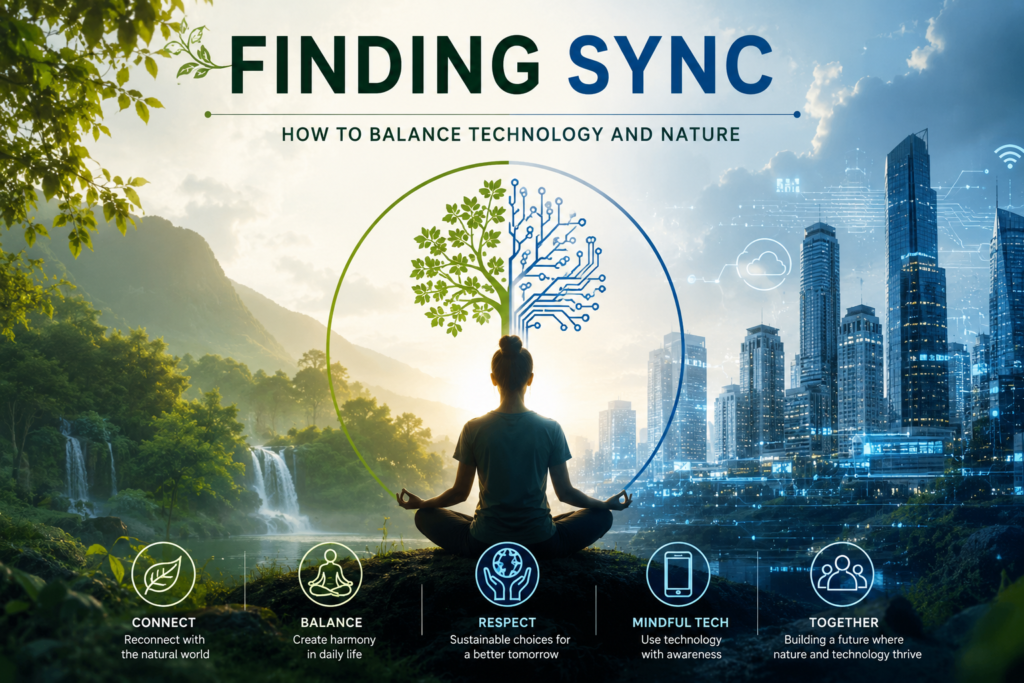
We live in two worlds at once. One is made of screens, notifications, and endless scrolling. We are pomoting Digital Footprint and driving the growth oriented approach via Digitally enabled tools . This is for certain to boost Digital Impressions leading unchecked usage of Technology and related tools . This is a kind of exploitation when it comes to protecting nature . However The other( ie. Nature ) is made of soil, sunlight, and birdsong. Most of us spend our waking hours fully immersed in the first world and only occasionally step into the second — usually on a weekend hike or a rushed vacation. But the two don’t have to compete. With a few intentional habits, technology and nature can actually support each other, creating a rhythm that feels less like a tug-of-war and more like a partnership..
1. Why the Imbalance taking place
Technology is designed to seek attention. Apps are built with notifications, unlimited and unchecked feeds, and reward “traps” that keep us browsing , tapping, and scrolling long after we intended to stop. Nature, on the other hand, asks for nothing. It doesn’t call for you or compete for your attention — which is exactly why it’s so easy to ignore.
This mismatch means that unless we deliberately carve out space for the natural world, technology will always win by default. The goal isn’t to reject technology — it has genuine value — but to stop letting it crowd out everything else.
2. Start With Awareness, Not Willpower
Most people try to fix screen time with sheer willpower: “I’ll just use my phone less.” This rarely works because it fights the very systems engineered to keep you engaged. A better starting point is awareness.
Track how you actually spend your time for a few days. Most phones already have a screen-time report built in. Look at it honestly, without judgment. The goal isn’t guilt — it’s information. Once you see where your hours are actually going, you can make deliberate trade-offs instead of vague resolutions.
3. Design Your Environment, Not Just Your Intentions
Environment beats intention almost every time. If your phone is on the nightstand, you’ll check it before sleep and after waking. If your walking route passes through a park instead of a parking lot, you’ll notice trees instead of traffic.
A few environmental shifts that make a real difference:
- Charge your phone outside the bedroom. This alone changes the first and last twenty minutes of your day.
- Keep outdoor gear visible and ready — shoes by the door, a water bottle already filled — so nature requires zero friction to access.
- Create tech-free zones, like the dinner table or the first hour after waking, where devices simply aren’t present.
Small physical changes remove the need for constant self-control.
4. Use Technology to Support Nature, Not Replace It
ironically, some of the best tools for reconnecting with nature are digital. Weather apps help you plan outdoor time around good conditions. Plant identification apps turn a walk into a small scavenger hunt. Fitness trackers can nudge you toward a morning walk instead of a scroll session.
The key distinction is whether technology is a bridge to nature or a replacement for it. A birdwatching app that helps you identify a species you just heard is a bridge. Watching a nature documentary instead of ever going outside is a replacement. Both have their place, but only one actually restores the balance.
6. Build Small, Repeatable Rituals
Big lifestyle overhauls rarely stick. Small rituals do. Instead of aiming for a dramatic “digital detox weekend,” try folding nature into your existing routine:
- Take phone calls while walking outside instead of sitting at a desk.
- Eat one meal a day without a screen, ideally near a window or outdoors.
- Trade five minutes of morning scrolling for five minutes of standing outside, no phone in hand.
These micro-habits compound. They don’t require a retreat to the wilderness — they just require noticing the small windows already available in an ordinary day.
7. Let Nature Reset Your Nervous System
There’s a physiological reason this balance matters. Constant notifications keep your nervous system in a low-grade state of alertness — always slightly “on.” Time in nature does the opposite: it lowers heart rate, reduces stress hormones, and gives your attention a chance to rest instead of react.
You don’t need a mountain retreat to get this benefit. Research on “micro-doses” of nature — even looking at trees from a window or sitting near a plant — shows measurable calming effects. The point isn’t escape; it’s regulation. Nature acts like a reset button that screens simply can’t replicate.
8.Redefine What “Productive” Means
Many people resist stepping away from technology because it feels unproductive. But productivity isn’t only about output — it’s also about the quality of attention you bring to your work. A short walk outside often clears mental fog faster than another cup of coffee or another tab opened.
Reframing outdoor time as part of your productivity system, rather than a distraction from it, makes it much easier to protect that time without guilt.
The Real Goal: Rhythm, Not Rejection
Finding sync with technology and nature isn’t about choosing one over the other. It’s about building a rhythm where each has its place — technology for connection, information, and efficiency; nature for rest, perspective, and calm. When the two are balanced, they don’t compete for your attention; they take turns supporting it.
The next time your phone buzzes, notice whether you’re reaching for it out of genuine need or out of habit. And the next time you step outside, notice how quickly your mind quiets down. That contrast is the whole lesson — and it’s available to you every single day, for free.
Recompiled by Madan Kumar